“A beautiful memo starts the conversation; usable width, repeat, cleaning chemistry and the installed assembly finish it.”
Selection principle for interior textile briefs
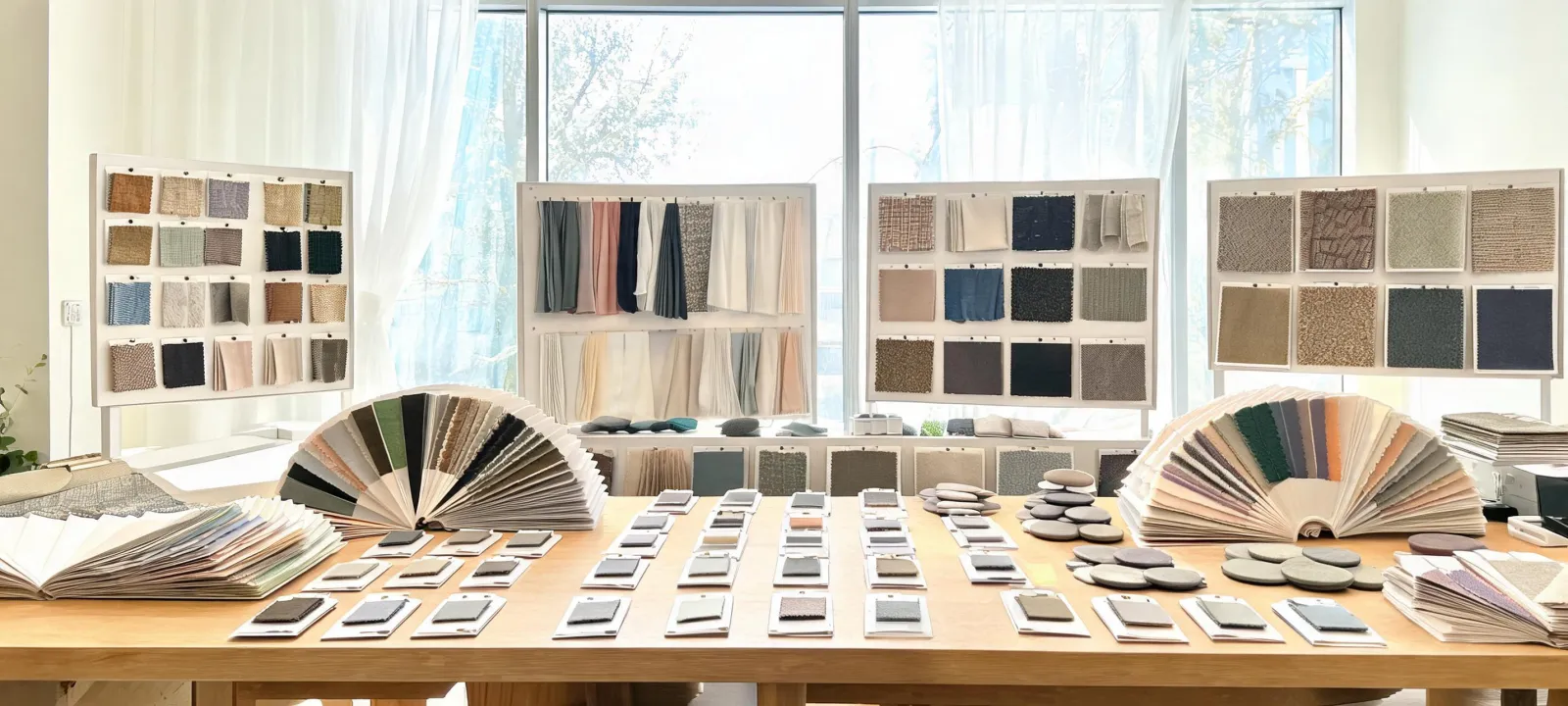
Move from color and handfeel to fiber content, weave, GSM, usable width, repeat, abrasion context, cleaning route and sample stage without losing the interior design intent.
The matrix narrows a broad palette to samples worth testing. Final suitability remains tied to the selected construction, color, finish, backing and assembly.
| Application | Construction fields | Performance questions | Approval sample |
|---|---|---|---|
| Contract seating | Fiber, weave, GSM, width, pile direction | Abrasion method, pilling, seam and cleaning | Memo, yardage and seat mock-up |
| Drapery | Width, repeat, weight, drape and finish | Light exposure, dimensional response and care | Full-drop sample and shade reference |
| Acoustic surfaces | Open area, stretch, backing and edge route | Coverage, installation handling and system test | Wrapped panel prototype |
| Transport interiors | Weave, repeat, backing, width and lot | Applicable flame/smoke method, wear and cleaning | Supplied composite and seat assembly |
No. Method, specimen, seam design, soiling, cleaning, pilling and the actual contact pattern also affect service behavior.
Only when the approval record defines the reference, light source and tolerance. Production lots still require shade and construction review.
No. Backing, adhesive, foam, thread and assembly can change stiffness, flame response, acoustics or durability and need applicable system evidence.
Before bulk approval, using the selected color, finish, agent, concentration, dwell time and repetition expected in the project.
Share the application, tactile direction, construction, GSM, width, repeat, cleaning route, target method, quantity, budget boundary and destination.